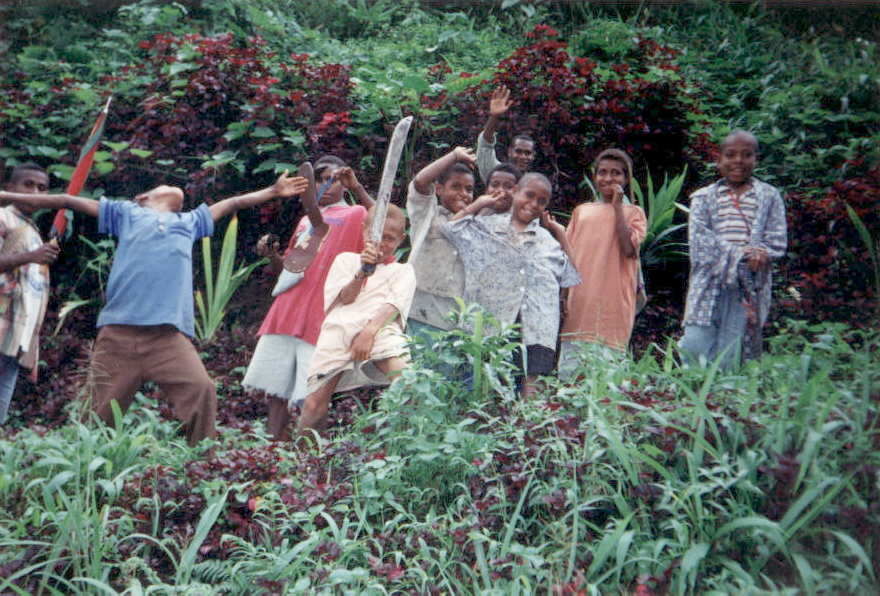
The Real History of the Mesem New Testament Part 3
We started our second term having completed the Gospel of Mark and the Book of James. The next goal was for a clear and evangelical use of the translated materials. Neil chose to translate Romans. What books spells out so clearly the truth of salvation by faith alone?
The translation of Romans proved to be tremendously challenging and fruitful. It took almost three years to get the manuscript to a place where it was in publishable form. (The Gospel of Matthew and other Pauline espitles were being drafted during this time, so other work was taking place.)
Neil and the men spent hours going over verses and talking about the meaning. One day in particular Esonuc stopped me and said, "I thought we tried very hard to be good and follow God and go to heaven. Know I know that was wrong thinking. True thinking is beleiving in Jesus". As Neil read translated portions to different clans some assumed the gospel of grace was a mistranslation. It was such "good news" that when people heard it they either reacted by saying, "No, this can't be true" or they said, "If this is true...then it is GOOD NEWS!".
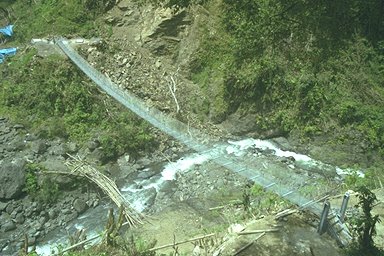
The community also participated in the greatest and most daunting cooperative project in their history: the construction of a sixty meter long bridge to span the Sankwe river. With the guidance, materials and funding provided by MAPS workers (short terms missionary workers from the Assemblies who donate their time on construction projects like this one), the Mesem people provided weeks of physical labor and worked together with our MAPS friends build an amazing bridge. Prior to that time the bridges were made of bamboo and frequently washed away by rising waters. The bridge was named "We have made this with our own hands".
Other tests came our way in the form of surgeries and the need to make two trips to Australia for a spinal fusion for Kathy as well as a gall bladder surgery. We periodically joked that removing all non-essential organs might be a way to prevent future trips. Nonetheless, on each trip we met people who didn't know the Lord or wanted to come back to him after many years. Once, a store manager in a mall spoke to Kathy and her friend Grace Fabian and asked them as they shopped, "Are you two Spirit filled Christians?". This was the source of some humour between Kathy and Grace as they come from totally different doctrinal backgrounds, but the Lord used that "chance meeting" in a mall for them to pray with the manager who was seeking God's help for her life. The fields are white with harvest...we just need to look around.
Another continued concern was Joel. His behavoir grew increasingly violent. Likewise there was renewed tension with the cargo cult among the villagers. A portin of the village set up a new hamlet and accusations of sorcery began to circulate.
At the same time, we began to make plans to build an office for future work. We needed more space, a place to hold Bible studies and to teach classes in reading. Teachers had been trained during our first term, but now we needed to teach others to correct Bible studies as we initated a correspondence Bible study program. As we finished our third term in PNG, our second with the Mesem, we believed we were entering into a time when we would begin to see the "fruit" of the work that was the cooperative effort of so many
Tuesday, July 29, 2008


Wednesday, July 2, 2008
Another Step on the Journey
I am writing from Springfield Mo where we have just finished another day at School of Missions. We are preparing for our return to the work of Bible translation with the Mesem. It's been a journey.
Our first term Michael Card gave us permission to use his song "There is a Joy in the Journey" for our slide show. It's a great song about the learning to love the places God brings us and knowing freedom in obeying Him. Since coming to MO we've seen friends with whom we trained 20 years ago who are continuing with us and doing the same work to see that no one in the world has to hear God's Word "second hand".
When we return to MA, I will continue to chronicle the "True Story of the Mesem Translation". Those are stories that need to be told. They are the markers that remind us God is faithful, He will do what He said, and "Faithful is He who has called you, who also will do it".
Pray that the Mesem work can resume quickly. We are anxious to get back to it. In the meantime, God is not idle and His Spirit is moving. It's His Name on the line.
Joyful on the journey,
Kathy
Our first term Michael Card gave us permission to use his song "There is a Joy in the Journey" for our slide show. It's a great song about the learning to love the places God brings us and knowing freedom in obeying Him. Since coming to MO we've seen friends with whom we trained 20 years ago who are continuing with us and doing the same work to see that no one in the world has to hear God's Word "second hand".
When we return to MA, I will continue to chronicle the "True Story of the Mesem Translation". Those are stories that need to be told. They are the markers that remind us God is faithful, He will do what He said, and "Faithful is He who has called you, who also will do it".
Pray that the Mesem work can resume quickly. We are anxious to get back to it. In the meantime, God is not idle and His Spirit is moving. It's His Name on the line.
Joyful on the journey,
Kathy
Thursday, June 12, 2008
The Real History of the Mesem New Testament: Yanga and Yohanuc
The Real History of the Mesem New Testament: Yanga and Yohanuc
The first great obstacle to translation was not the attacks or the illnesses. Yes, they were hassles. Our obstacle was we had no one who would work with us. The village elders assigned a group of men and all left the village within the first week. We kept praying and asking people to work with us, but every day it seemed was spent doing medical work, lending tools, fixing something for someone and suriving. Translation seemed it would never begin.
Joyce Turner organized friends to fast and pray.
One Saturday a man we had not met before came to our door and asked, “Do you believe in binding spirits in Jesus Name?”. We invited him to eat with us.
His name was Yanga Tumbe and he had returned to the area 2 years prior to share the gospel after coming to faith. He felt he had no one listening and prayed about what to do. The Lord told him to come and talk to us. That night Yanga explained a dynamic of Mesem spiritual beliefs about which we knew nothing: the Mesem had a strong allegience to a spirit named “sankumtulung” (we don't capitilize their names purposefully). They believed that if they honoured this spirit's name, and treated him well with offerings, he would look after them. Saying his name aloud was disrespectful, which explained why we had not heard the name before. The people used euphamisms to refer to him. That night the three of us agreed in prayer to bind sankumtulung.
The next day Yohanuc Wenge, who we had asked to assist on several occassions said, “Let's work together”. In a way that only God could have forseen the man who brough the gospel to the Mesem was also instrumental in beginnings of the translation of the Word of God for the Mesem people.
The first great obstacle to translation was not the attacks or the illnesses. Yes, they were hassles. Our obstacle was we had no one who would work with us. The village elders assigned a group of men and all left the village within the first week. We kept praying and asking people to work with us, but every day it seemed was spent doing medical work, lending tools, fixing something for someone and suriving. Translation seemed it would never begin.
Joyce Turner organized friends to fast and pray.
One Saturday a man we had not met before came to our door and asked, “Do you believe in binding spirits in Jesus Name?”. We invited him to eat with us.
His name was Yanga Tumbe and he had returned to the area 2 years prior to share the gospel after coming to faith. He felt he had no one listening and prayed about what to do. The Lord told him to come and talk to us. That night Yanga explained a dynamic of Mesem spiritual beliefs about which we knew nothing: the Mesem had a strong allegience to a spirit named “sankumtulung” (we don't capitilize their names purposefully). They believed that if they honoured this spirit's name, and treated him well with offerings, he would look after them. Saying his name aloud was disrespectful, which explained why we had not heard the name before. The people used euphamisms to refer to him. That night the three of us agreed in prayer to bind sankumtulung.
The next day Yohanuc Wenge, who we had asked to assist on several occassions said, “Let's work together”. In a way that only God could have forseen the man who brough the gospel to the Mesem was also instrumental in beginnings of the translation of the Word of God for the Mesem people.
Tuesday, June 10, 2008
The Real History of the Mesem Translation Part One
This is an effort to record the events that have taken place during the Mesem translation, term by term so that we might remember, pray and perservere.
Time is not recorded in Papua New Guinea (PNG) villages the way it is recorded in the western world. So the exact year when Yohanuc Wenge first heard the Gospel in his Nabak village and chose to believe in Jesus is not known in this temporal realm. It is certainly known in heaven. German missionaries had brought the gospel to Finchafen and from there Kote speakers carried word inland of the gospel of Jesus Christ. (The spelling of Kote uses non-English characters, however the “o” is an “a” with a charet above.) There were huge language barriers and much was not communicated but the saving knowledge of Christ was proclaimed so that when Yohanuc understood the message, he decided to move the neighboring Mesem language area and begin to tell The Story.
The Bible was translated into Kote which over time became a trade language in much of Morobe Province. People learned to speak it of necessity so they could trade with one another and it was in this language that liturgy and teaching materials were made available. Kote, much like the Latin of the church in which I was raised, became the language of faith. To the extent one learned it well and could read this language, they had access to the scripture. As Melanesian Pidgin grew in usage in PNG, Kote use declined. It is unusual among the Mesem to meet anyone under 55 who can read and speak Kote.
A translation project was initiated in 1987 by a family from CA. They built a house and an office underneath but serious health issues arose and they had to leave permanently before they were able to begin translation of the scriptures. The project was idle for two years until we made a visit in 1992 just a few weeks prior to our first furlough. It is our prayer that what you now read, wil cause you to understand why we so need prayer for this task to be accomplished. If we did not believe God desired it for the Mesem, we would have stopped long ago.
Our first visit was to see if Samanzing, the main Mesem village at that time, was the place God wanted us to go. I was pregnant with Tony, but at 98 lbs, no one could tell from looking at me. We went and met with the leaders of the village who assigned a well educated (eight grade leaver) to assist us with learning the language. He was smart and pleasant and after four days we seemed to be settling in.
The first weekend, Pastor Pien asked Neil to come and preach. I was alone in the village when the same man who was supposed to be helping us had the first of a series of “psychotic episodes” that have continued to harass the work. He became violent, was tied with metal bindings so tightly his hands swelled, and when he broke free he ran to our house. I was warned he was coming and barricaded myself in the house saying, “Well, this is going to be a fascinating place to work”. He banged on the door, screamed and threatened to burn down the house and “that child you have”.
I will now list the events that occurred on subsequent visits:
First post furlough visit 1993: threatened with house burning by the same man
Second village stay: Two men enter the house and make threats
Third village stay: Woman chants and dances around the house and has to be removed from the village. Another man has a “psychotic episode”.
Four village stay: Kathy becomes ill with dengue.
Next attempt to return to village: Kathy becomes ill with hepatitis so Neil goes alone
Neil returns and is also ill with hepatitis. (The vaccine came out the following year).
Because we were too ill to be in a remote village we tried to resume working from the mission station at Ukarumpa. The week the co-translators were to arrive Kathy came down with pneumonia.
While trying to continue work on the first gospel an attempt was made to snatch Tony. The man was caught before he got a quarter mile from the house.
It is now March of 1996 and we returned to the village. We were subject to an assualt that required us to leave again. The day after we were back to the mission station our son and his cousin, Silvio, went missing. After a search they were found going into a river area about a mile from our house. They said they saw something frightful that told them to run and they kept running.
Neil returned from the interior three days later. After good mental health, a cotranslator had a pyschotic episode and had to be removed from the mission station.
We completed the Gospel of Mark and it was dedicated. The day after dedication a man threatened us to stop angering the spirits. Neil began translating James and Kathy was found to need surgery.
That was our first term. What followed, continued and grew in intensity. God has a plan, and it is never accomplished unless He makes it happen.
Time is not recorded in Papua New Guinea (PNG) villages the way it is recorded in the western world. So the exact year when Yohanuc Wenge first heard the Gospel in his Nabak village and chose to believe in Jesus is not known in this temporal realm. It is certainly known in heaven. German missionaries had brought the gospel to Finchafen and from there Kote speakers carried word inland of the gospel of Jesus Christ. (The spelling of Kote uses non-English characters, however the “o” is an “a” with a charet above.) There were huge language barriers and much was not communicated but the saving knowledge of Christ was proclaimed so that when Yohanuc understood the message, he decided to move the neighboring Mesem language area and begin to tell The Story.
The Bible was translated into Kote which over time became a trade language in much of Morobe Province. People learned to speak it of necessity so they could trade with one another and it was in this language that liturgy and teaching materials were made available. Kote, much like the Latin of the church in which I was raised, became the language of faith. To the extent one learned it well and could read this language, they had access to the scripture. As Melanesian Pidgin grew in usage in PNG, Kote use declined. It is unusual among the Mesem to meet anyone under 55 who can read and speak Kote.
A translation project was initiated in 1987 by a family from CA. They built a house and an office underneath but serious health issues arose and they had to leave permanently before they were able to begin translation of the scriptures. The project was idle for two years until we made a visit in 1992 just a few weeks prior to our first furlough. It is our prayer that what you now read, wil cause you to understand why we so need prayer for this task to be accomplished. If we did not believe God desired it for the Mesem, we would have stopped long ago.
Our first visit was to see if Samanzing, the main Mesem village at that time, was the place God wanted us to go. I was pregnant with Tony, but at 98 lbs, no one could tell from looking at me. We went and met with the leaders of the village who assigned a well educated (eight grade leaver) to assist us with learning the language. He was smart and pleasant and after four days we seemed to be settling in.
The first weekend, Pastor Pien asked Neil to come and preach. I was alone in the village when the same man who was supposed to be helping us had the first of a series of “psychotic episodes” that have continued to harass the work. He became violent, was tied with metal bindings so tightly his hands swelled, and when he broke free he ran to our house. I was warned he was coming and barricaded myself in the house saying, “Well, this is going to be a fascinating place to work”. He banged on the door, screamed and threatened to burn down the house and “that child you have”.
I will now list the events that occurred on subsequent visits:
First post furlough visit 1993: threatened with house burning by the same man
Second village stay: Two men enter the house and make threats
Third village stay: Woman chants and dances around the house and has to be removed from the village. Another man has a “psychotic episode”.
Four village stay: Kathy becomes ill with dengue.
Next attempt to return to village: Kathy becomes ill with hepatitis so Neil goes alone
Neil returns and is also ill with hepatitis. (The vaccine came out the following year).
Because we were too ill to be in a remote village we tried to resume working from the mission station at Ukarumpa. The week the co-translators were to arrive Kathy came down with pneumonia.
While trying to continue work on the first gospel an attempt was made to snatch Tony. The man was caught before he got a quarter mile from the house.
It is now March of 1996 and we returned to the village. We were subject to an assualt that required us to leave again. The day after we were back to the mission station our son and his cousin, Silvio, went missing. After a search they were found going into a river area about a mile from our house. They said they saw something frightful that told them to run and they kept running.
Neil returned from the interior three days later. After good mental health, a cotranslator had a pyschotic episode and had to be removed from the mission station.
We completed the Gospel of Mark and it was dedicated. The day after dedication a man threatened us to stop angering the spirits. Neil began translating James and Kathy was found to need surgery.
That was our first term. What followed, continued and grew in intensity. God has a plan, and it is never accomplished unless He makes it happen.
Subscribe to:
Posts (Atom)




 Posts
Posts



.jpg)